Hey everyone, if you’ve ever dabbled in power cable manufacturing—even just as someone who’s had to dig a replacement line for your backyard shed—you’ve probably heard throwaround terms like “insulation compounds” and “insulation shield compounds.” And I get it, they sound basically the same, right? I mean, both are gunk you melt and squeeze around copper or aluminum wires, so why the two separate names? Let me tell you, as a power cable compounds supplier who’s dealt with this confusion (and fixed a whole lot of mix-ups for clients), mixing these two up is a fast track to headaches, field failures, and worse. I’m gonna break this down like I would with a new production supervisor on our floor—no stuffy jargon, just the real, working difference. Power Cable Compounds
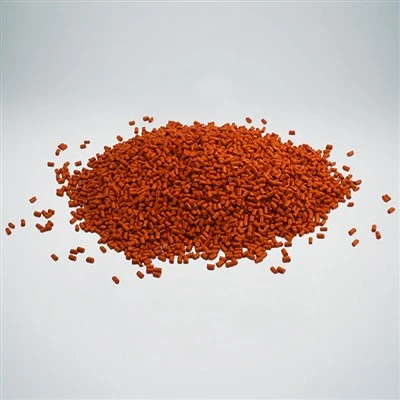
First, let’s start with the big picture: what each is designed to do. Let’s kick off with insulation compounds, since that’s the one most folks have a passing clue about. Think of insulation as the wire’s personal bubble—its job is to keep the electricity flowing exactly where it’s supposed to: in the conductor. This stuff’s a die-electric, meaning it won’t let electricity pass through it. So if you’ve got a 120-volt wire running to your fridge, the insulation is the plastic (or XLPE, cross-linked polyethylene, which is way more common these days) wrapping that stops the current from jumping to the metal conduit running next to it, or shorting out if you accidentally nicked the outer jacket. I work with a lot of clients in residential and low-voltage commercial markets, and their go-to insulation compounds are usually tailored for voltage level—thin stuff for 12/2 Romex, thicker, more robust XLPE for medium-voltage industrial lines. The key here is that they’re engineered for maximum dielectric strength; they’re built to withstand the electrical pressure between the hot conductor and whatever’s outside it. No small gap for error here.
Now, insulation shield compounds—most folks call these “insulation shields” or just “shields” for short, no need for the full fancy name unless you’re at a trade show. This is the one that gets lost in the shuffle, and it’s the secret sauce most new cable makers skip because they think “we already have an insulator, why add another layer?” Let me explain why that’s a terrible call. Power lines don’t have perfect, smooth conductors, right? Copper or aluminum strands have tiny little bumps, nicks, and gaps where they’re twisted together. If you wrap just insulation around a bumpy conductor, that’s like putting a lumpy blanket on a lumpy bed—you’re left with little air pockets between the conductor and the insulation. And air is a lousy die-electric; it breaks down under electrical pressure way faster than polymer. That’s where the insulation shield comes in. It’s a semi-conductive material—meaning it’s not an insulator, it’s not a full conductor, it’s in that gray middle ground with just enough carbon black (or another conductive filler) to let electricity flow very, very easily. Its whole job is to smooth out that conductor’s bumps so the insulation has a perfectly flat, uniform surface to sit on. No air gaps, no hot spots, no early insulation failure.
Wait, let’s get specific about materials, because that’s where the real, tangible difference shows up. Insulation compounds are almost always die-electric polymers—XLPE, PVC, EPDM, stuff like that. They’re non-conductive, high molecular weight, engineered to resist electrical breakdown. For example, our standard medium-voltage XLPE insulation compound has a dielectric strength of around 25 kV per mm—so it can take 25,000 volts for every millimeter of thickness before it lets current through. We test every batch for that exact number, because if it’s off even a little, the line will fail before it hits the warranty period.
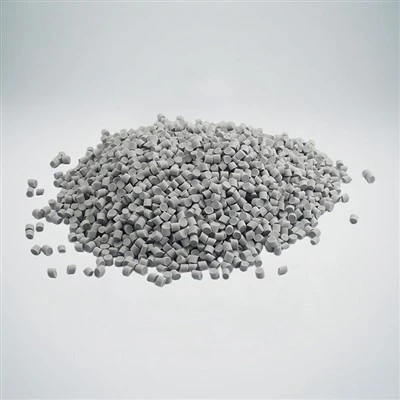
Insulation shield compounds? They’re based on the same polymers as insulation, but with a heavy dose of conductive filler—usually carbon black, sometimes graphite—mixed in to bump their conductivity up to that semi-conductive sweet spot. The conductivity is measured in S/m (siemens per meter, but we just call it “conductivity level” on our spec sheets) and it’s tightly controlled. Too little filler, and it’s not semi-conductive enough; you still get air gaps and hot spots. Too much filler, and it’s actually too conductive—it can draw current away from the conductor, leading to losses or even shield failures. For medium-voltage shields, we target around 10^-4 to 10^0 S/m, which is just enough to make a smooth, uniform electrical contact between conductor and insulation, no gaps. That’s not a random number, by the way—we’ve got R&D guys who tweak that ratio of polymer to filler every month to hit that exact sweet spot for different voltage classes.
Let’s talk about how they’re applied, because that’s another big difference you’ll see on a production line. Insulation is the middle layer (or the only layer, for low-voltage single-core cables) that sits directly on the conductor. It’s extruded at a precise thickness, with no conductive fillers, so it’s pure die-electric. Insulation shield? It’s the thin layer right on top of the conductor, between the conductor itself and the insulation. Wait, for multi-core cables, it’s a bit different—each individual core has its own conductor, conductor shield (another thin semi-conductive layer on the bare copper, wait, hold on, don’t mix conductor shield and insulation shield! I get that next), insulation, insulation shield, and then all that is wrapped in a common jacket shield for the whole cable. So to clarify, insulation shield is per core, right on top of the insulation, conductor shield is on the bare conductor—they’re separate, do different jobs, easy mix-up.
Let’s use a real-world example from a client of mine a couple years back. They were making 15kV medium-voltage lines for a solar farm, and they cut corners on the insulation shield, thinking “it’s just a thin layer, the insulation is the important part.” Six months after installation, they started getting failure calls—lines were shorting out during peak solar production, when voltage was highest. They sent us a failed sample, and when we ripped it apart, we saw tiny air gaps between the copper strands and the insulation, where the insulation shield should have been. The insulation was fine, but the air gaps created localized electrical stress that burned right through the insulation. We walked them through switching to our EPDM-based semi-conductive insulation shield (specifically formulated for medium voltage outdoor use, resistant to UV and temperature swings) and they haven’t had a failure since. That’s the kind of cost savings you miss when you don’t understand the difference.
Another example: a residential builder client was using Romex that had the same compound for insulation and shield, cut costs by using cheaper PVC for both. They had constant issues with shorted outlets in new homes, especially in bathrooms and basements where moisture was high. Why? The shield wasn’t properly semi-conductive, so water seeped into the gaps around the conductor, and the mixed insulation couldn’t resist the electrical pressure when the water acted as a conductor. Swapping to separate compounds fixed their warranty claims by 90% in a year. Cool, right?
Wait, let’s clear up another common myth: can you use the same compound for both? The short answer is no, not reliably. Even if you tried to add conductive filler to an insulation compound, you’d mess up its dielectric strength. Insulation needs to be as non-conductive as possible, so any filler would weaken that. And insulation can’t conduct at all, so even the tiniest amount of insulation filler (if you tried to use it as a shield) wouldn’t smooth out the conductor’s surface, leading to hot spots. It’s a tradeoff—each is engineered for a specific, non-negotiable set of properties.
Also, temperature resistance is a big one. Insulation compounds have to hold up to the operating temperature of the cable—for underground power lines, that’s often 90°C continuous, 130°C peak during faults. Insulation shields have to hold up to the same temps, but also keep their conductivity steady over that time. If a shield compound’s conductivity drops after a few years of heat, it stops doing its job, and you get failures. We test both compounds for thermal aging—bake them at 120°C for 1000 hours, check their properties—so we can guarantee they’ll hold up for 25 years, the standard for power cables.
Let’s break it down into plain bullet points for anyone who’s a visual learner (I know I am):
- Core Purpose:
- Insulation: Block current from leaving the conductor (die-electric, no conductivity)
- Insulation Shield: Smooth conductor surface to eliminate air gaps, distribute electrical stress evenly (semi-conductive, low, controlled conductivity)
- Material:
- Insulation: Pure polymer (XLPE, PVC, EPDM) with high dielectric strength, no conductive fillers
- Insulation Shield: Same base polymer as insulation, plus calibrated amount of carbon black/graphite to hit semi-conductivity
- Application Location:
- Insulation: Wrapped around the insulation shield (or conductor, for low-voltage single-core)
- Insulation Shield: Wrapped directly around the bare conductor, between conductor and insulation
- Key Failure Risk If Mixed Up:
- Mixed: Air gaps, hot spots, electrical breakdown, short circuits, early field failures, warranty claims
Now, as a supplier, this isn’t just academic for me. I deal with clients every week who are expanding their product lines—maybe they’re moving from residential to medium voltage, and suddenly they realize they need two different compounds, not one. A lot of smaller manufacturers try to source generic compounds from places that don’t specialize in power cable materials, and they get burned when the specs aren’t right. The problem is, generic compounds aren’t formulated for the exact electrical properties you need for transmission and distribution lines. We work with clients to spec both insulation and insulation shield compounds based on their exact voltage class, application (underground, overhead, residential, industrial), and environmental conditions (UV, moisture, temperature extremes). For example, a shield compound for an offshore wind farm needs to be resistant to saltwater, not just temperature, so we tweak the base polymer to be more hydrolysis-resistant. An insulation compound for a mining cable needs to be flame-retardant, so we add the right additives without killing its dielectric strength.
I also get a lot of “can I just get one compound that does both?” And the answer is technically maybe for super low-voltage, like 12V automotive wires, but that’s a tiny niche and not reliable for anything that carries meaningful current. Even 240V residential lines will start having issues over time because the compound won’t hold both properties. The tradeoffs in material science here are real—you can’t have a material that’s both a perfect die-electric and a perfect semi-conductor, it’s impossible. So you need two separate, optimized compounds.
Wait, let’s address a question I always get: what about conductor shields, since I mentioned that earlier? Just to avoid confusion—conductor shields are thin semi-conductive layers on the bare conductor, right on top of the copper. Their job is also to smooth the conductor, but they’re a bit more conductive than insulation shields, because they have to carry tiny amounts of current to distribute stress along the conductor, not just between conductor and insulation. Different compound, different spec, another layer of the onion. But the main takeaway here is insulation vs insulation shield—those two are definitely not interchangeable.
Let me wrap this up with something practical, because I know most of you reading this are either in cable manufacturing, specifying cables for projects, or maybe just a DIYer who wants to make sure you’re picking the right stuff. If you’re ordering power cable compounds, don’t just say “give me insulation material.” Specify both insulation and insulation shield, make sure your supplier is breaking down the specs for each, not lumping them together. If you’re having field failures, pull apart a bad sample—if there’s a thin conductive layer missing between the conductor and insulation, that’s your insulation shield problem.
I’ve been in this business for 12 years, and the number one mistake new suppliers or new production teams make is mixing these two compounds. It doesn’t sound like a big deal until you’re fielding failure calls from a solar farm that’s down during peak production, or a residential builder getting a dozen warranty claims a week. Taking the time to get the difference right up front saves everyone a ton of time, money, and headache.
EU Standard Railway Cable Compounds If you’re working on a new cable project, upgrading your line of compounds, or just need to troubleshoot why your lines are failing, reach out. We don’t do one-size-fits-all, we work with you to spec the exact insulation and insulation shield compounds you need, tailored to your application, no fluff, just real specs that work. No generic stuff, no hidden costs, just the reliable materials that keep power flowing where it needs to go, when it needs to go there.
References
- IEEE Standard for Insulated Power Cables, IEEE Std 400-2012, Institute of Electrical and Electronics Engineers
- Webster, I. A. (2018). Polymer Compounds for Power Cable Insulation and Shielding. Journal of Electrical Materials, 47(3), 1892-1901
- Underwriters Laboratories (UL) Standard for Power Cable Compounds, UL 44, Underwriters Laboratories Inc.
Opta New Materials (Jiangsu) Co., Ltd.
As one of the most professional power cable compounds manufacturers and suppliers in China, we also support customized service. We warmly welcome you to buy bulk durable power cable compounds from our factory. If you have any enquiry about free sample, please feel free to email us.
Address: No.80, Jingang Avenue, Zhenjiang New Area, Zhenjiang City, Jiangsu Province, China.
E-mail: le.yin@optachem.com
WebSite: https://www.optanewmaterials.com/
