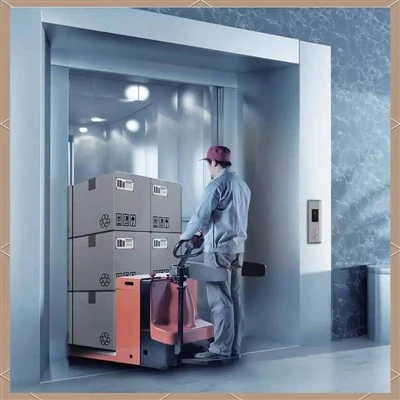
Freight Elevators If you’ve ever waited 10 minutes for a hospital elevator at 2 a.m. during a shift change, or stepped into one on a busy trauma floor and noticed a faint grinding noise as it glided past your floor, you’ve probably wondered: How often are hospital elevators maintained? As a supplier who’s spent the last 12 years working on these elevators—installing, repairing, and keeping them running for facilities across the Midwest—I can tell you this isn’t a question with a one-size-fits-all answer. It’s a balance of regulatory rules, risk level, building size, and the unique needs of patients, staff, and providers who depend on these elevators every single day. Most people see an elevator as a machine that goes up and down. At hospitals, though, they’re the lifeline. They transfer critical patients to the OR, carry lab samples to the lab, transport new patients to wings, and even bring food and linens to floors. A breakdown during a Code Blue? That’s not an inconvenience. That’s a delay that can put a life at risk. So the maintenance schedule for hospital elevators is way stricter than what you’d see in a shopping mall or office building. Let’s break it down. First, the baseline: Federal regulations in the U.S. from the Occupational Safety and Health Administration (OSHA) and the American Society of Mechanical Engineers (ASME) set minimum requirements, but most hospitals go above and beyond these because they can’t afford downtime. OSHA’s Lockout/Tagout standard (29 CFR 1910.147) requires maintenance work to be done only by trained technicians, and ASME’s A17.1 code, which covers all elevator safety, mandates that elevators be inspected at least every two weeks for heavy-use locations, and monthly for lighter ones. But for hospitals, “lighter use” is almost unheard of. A 100-bed community hospital might have 4–6 elevators, each moving 1,500–2,000 people a day. A large academic medical center? That can hit 10 elevators per building, some moving more than 5,000 people a day—including stretchers, bariatric carts, and bulky medical equipment. For these high-traffic units, most hospitals sign a maintenance contract that includes weekly preventive checks, not just biweekly or monthly. But maintenance isn’t just about external inspections. It’s a split between preventive maintenance (routine checks to catch issues before they become failures), corrective maintenance (fixing broken parts), and predictive maintenance (using data to spot wear and tear before it causes a breakdown). As a supplier, we work with hospitals to build schedules tailored to their specific elevator type, traffic, and age. Let’s use an example: A new hospital built in 2021, with energy-efficient machine-room-less (MRL) elevators, serving a 300-bed campus. For these, we recommend weekly preventive checks: things like testing the emergency backup power (critical for blackouts), checking the traction cables for fraying, calibrating the door sensors (which are way more sensitive than residential ones—they need to detect a 1-inch hand to reclose, not a whole car), and testing the intercom systems to the lobby and security. Then, every quarter, we do a deeper dive: lubricating moving parts that don’t get accessed easily, checking the controller’s software for updates, and load-testing with a full stretcher and wheelchair to make sure the elevator doesn’t sway or slow down unexpectedly. For older elevators, say a 1990s traction model that’s already had multiple part replacements, we double the frequency: biweekly preventive checks, monthly deep inspections, and around-the-clock predictive monitoring. These older models tend to have more wear on their cables and gears, so we use sensors that track vibration and temperature in real time. Last year, we caught a worn gear bearing on a 25-year-old elevator at a rural hospital before it failed. If we’d waited for the biweekly check, that failure would have left the orthopedic floor without a working elevator for 12 hours on a rainy Friday, when patients were being discharged and new ones were being admitted. That’s the kind of difference consistent maintenance makes. Now, you might be asking: How do hospitals choose this frequency? It boils down to three key factors: risk, traffic, and cost. Risk is non-negotiable in healthcare. The Joint Commission, which accredits nearly all U.S. hospitals, includes elevator reliability as part of their Environment of Care standards. During surveys, they check maintenance logs, inspection reports, and uptime rates. A hospital that can’t prove it’s maintaining its elevators at the required frequency can lose its accreditation, which means it can’t accept Medicare or Medicaid payments—so it can’t operate. That’s why even small, rural hospitals, which might have tighter budgets, will prioritize elevator maintenance over other, less critical capital expenses. Traffic is the next big one. We track elevator “cycles” (each time the elevator moves from one floor to another, that’s one cycle) to gauge how hard the unit is working. A standard office elevator might see 10,000 cycles a month. A hospital elevator? That’s 50,000–100,000 cycles a month, especially during flu season or when a campus is hosting a major medical conference with out-of-town patients. More cycles mean more wear on every part, so maintenance has to be more frequent. Cost is the tricky middle ground. Hospitals don’t have unlimited budgets, so they have to balance strict maintenance with keeping costs manageable. As a supplier, we’ve developed tiered maintenance plans: a basic plan that meets regulatory minimums, a mid-tier plan that adds weekly checks and predictive monitoring, and a premium plan that includes 24/7 on-call service. Most hospitals opt for mid-tier for their standard elevators, and premium for the ones that serve the emergency department, OR wing, or ICU—those are the units that can’t go 10 minutes without working. I’ve seen a lot of myths about hospital elevator maintenance, and one of the biggest is that it’s all dictated by regulations. That’s not true. For example, OSHA doesn’t require weekly checks for non-hospital elevators, but a lot of our hospital clients insist on them. Last year, a children’s hospital told us they wanted their two pediatric stretch elevators checked every 3 days, not weekly, because they had a 6-month-old patient who needed to go to the MRI suite every 4 hours, and a breakdown would mean carrying that patient in a crib up three flights of stairs. That’s the kind of specific, patient-centered need that drives maintenance schedules, not just rules. Another myth: Older elevators are less maintainable, so hospitals just replace them instead. That’s not always the case. We recently upgraded a 1988 elevator at a cancer center—we didn’t replace the whole unit, just updated the controller, traction cables, and door systems, and adjusted the maintenance schedule to weekly checks. The hospital saved $2 million by upgrading instead of replacing, and the elevator now has a 99.8% uptime rate, which is better than many new elevators on the market. The key there was adjusting the maintenance frequency to match the upgraded parts—even older machines can work reliably if they’re inspected and adjusted regularly. So how often should hospital elevators be maintained? The answer is: At minimum, every two weeks for biweekly inspections, but for most hospitals, that’s just a baseline. The sweet spot is weekly preventive checks for high-traffic elevators, monthly deep inspections, and predictive monitoring to catch issues early. For elevators serving critical areas (ED, OR, ICU), that frequency might go to every three days, with 24/7 technician access. If you’re a hospital facilities manager or procurement lead reading this, let me be clear: Cutting corners on elevator maintenance isn’t a way to save money. It’s a way to put patients, staff, and your accreditation at risk. Last year, a hospital 2 hours from here had three elevator breakdowns over a weekend because they skipped a month of maintenance checks. One of the breakdowns happened while a trauma team was moving a patient from the ED to the CT scanner. The patient’s condition worsened, and while he survived, the hospital was fined by OSHA and put on probation by The Joint Commission. That’s not a story I want to see repeated. At the end of the day, hospital elevators aren’t just machines. They’re part of the care team. A well-maintained elevator gets a stroke patient to rehab on time, lets a nurse grab a medication from the pharmacy before a dosage is due, and lets a family visit their loved one in the ICU without waiting for 20 minutes in the lobby. If you’re responsible for hospital elevators, whether you’re a facilities director or a procurement specialist, you know how critical this is. If you’re looking to review or adjust your elevator maintenance plan, or you’re considering upgrading your elevators to get better reliability and lower long-term costs, we’re here to help. Our team has worked with hundreds of hospitals to build custom maintenance schedules that fit their unique needs, budgets, and patient populations. Reach out to discuss your hospital’s elevator needs—we can walk through your current uptime, inspection logs, and create a plan that keeps your elevators running when it matters most.
References
National Elevator Industry Inc. Elevator Maintenance and Safety Guidelines
Occupational Safety and Health Administration. 29 CFR 1910.147, The Control of Hazardous Energy (Lockout/Tagout)
American Society of Mechanical Engineers. ASME A17.1-2023, Safety Code for Elevators and Escalators
The Joint Commission. Environment of Care Standards for Hospitals, 2024 Hospital Elevator
Ningbo Dongao Elevator Co., Ltd.
As one of the most experienced hospital elevator manufacturers and suppliers in China, we also support customized service. We warmly welcome you to buy high quality hospital elevator for sale here from our factory. For quotation, contact us now.
Address: No. 16 Xiapan Road, Ninghai County, Ningbo City, Zhejiang Province
E-mail: 13777289058@163.com
WebSite: https://www.daelevator.com/
