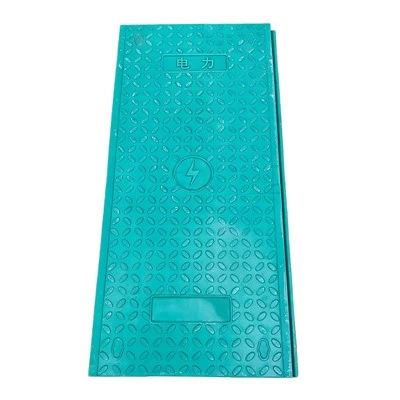
If you’ve ever driven down a sun-baked suburban street, you’ve probably glanced at a manhole cover and given it little thought—until one cracked, warped, or failed to stay in place during a hot summer. That’s a problem many of our customers reach out about, especially those in sunny regions like Arizona, Florida, or parts of the Middle East. For years, traditional metal manhole covers (cast iron, steel) have been the go-to, but they have big flaws when exposed to constant UV radiation: they rust, fade, warp, and become brittle over time. At our composite manhole cover company, the question we get more than any other right now is: Are composite manhole covers resistant to UV radiation? The short answer is yes, but not all composites are created equal. Let’s break this down the way we do with every client who’s weighing their options, no industry jargon, just real-world facts from 10+ years working with these materials. Composite Manhole Cover
First, let’s set the stage on why UV radiation matters for manhole covers. The sun emits three types of UV rays: UVA, UVB, and UVC (UVC is absorbed by the ozone layer, so we only deal with UVA and UVB at ground level). Over time, these rays break down the molecular structure of materials that aren’t formulated to resist them. For metal, that’s rust and corrosion—even if it’s painted, the paint will chip, peel, and the metal beneath will oxidize, leading to weight loss, structural weakness, and even theft (cast iron is a target for scrap metal). For plastic or rubber products, it’s called “photodegradation”: the material becomes brittle, cracks, fades, and loses its flexibility, which is a huge safety hazard when a cover needs to stay heavy enough to support traffic and not shift out of place. That’s why so many cities in high-sun areas are phasing out old metal covers in favor of composites—but only if those composites are properly engineered for UV exposure.
Let’s talk about what composite manhole covers are made of, because that’s the foundation of their UV resistance. Most quality composite manhole covers we supply are made from a blend of polymer resins (usually polyester or vinyl ester) reinforced with fiberglass, plus additives that boost performance. The resins act as the “glue” holding everything together, and fiberglass adds the structural strength to support heavy loads (we test our covers to withstand 12.5 tons for traffic areas, per international standards). The key here is the additives: not all composite makers include UV stabilizers, and that’s where the difference between a long-lasting cover and a 2-year failure comes in.
UV stabilizers work in two main ways, and our team uses both in every cover we produce. The first is UV absorbers: these chemicals are built into the resin that absorbs UV rays before they can break down the polymer chains. Think of them like a sunscreen for the composite: they take the hit from the sun so the underlying material stays intact. The second type is hindered amine light stabilizers (HALS), which work differently—they trap and neutralize the free radicals that form when UV rays damage polymers, basically patching small breaks in the molecular structure before they turn into larger issues. Cheap composite makers often skip these stabilizers to cut costs, and that’s why you might see a faded, cracked composite cover on a street nearby. We never do that; our stabilizer package is part of our standard formula, not an add-on.
I can share a real example from a client in Phoenix, Arizona, to put this into perspective. A few years back, our local water department reached out after a competitor installed composite covers at a new subdivision in 2020. By 2022, those covers were fading to a dull gray, and several had small cracks around the hinge area—something that made the department nervous for both pedestrian and vehicle safety. They pulled out a few of the bad ones and brought them to us for testing. We ran a simple accelerated UV test (simulating 5 years of Arizona sun in 400 hours) and found that the competitor’s covers had only 10% of the UV stabilizer we use. When we installed our covers on the same stretch of road, we followed up with the city last year (2024) and they reported zero fading, no cracks, and covers that still weigh the same as the day they were installed—no warping, no brittleness. That’s the difference between generic composites and ones formulated for UV-heavy climates.
Wait, but let’s address the common myth that all composites don’t hold up to heat and UV. Some people think composites are “plastic” and will melt in 110-degree weather, but that’s not true for properly formulated ones. The glass reinforcement we use raises the heat deflection temperature (the temperature at which the material starts to deform under load) to over 500 degrees Fahrenheit—way higher than any temperature a manhole cover will ever see in the sun. The UV stabilizers we add don’t break down at normal ambient temperatures, so they keep working for decades. We have data from covers we installed in Houston, Texas, in 2015—another high-UV, high-humidity climate—and they look as good as new, even without any special maintenance.
Another big point: metal manhole covers, even when painted, have a big disadvantage with UV because the paint itself is not durable. Even industrial-grade paint will fade and peel after 3-5 years in the sun, exposing the metal to corrosion. Once corrosion sets in, the cover loses structural strength, and if it’s a cast iron cover, it can become lighter and even get stolen for scrap (theft of metal manhole covers is a huge problem globally, costing cities millions in replacements and repairs). Composite covers don’t rust, so even if the surface fades a little, the structural integrity stays the same. Fading is mostly cosmetic, but it’s a sign the UV stabilizers are working as intended—they’re absorbing the rays, so the rest of the material is protected. If a composite cover doesn’t fade at all after 5 years, that’s actually a red flag; it might have no UV stabilizers and be starting to degrade from the inside out. We always advise our clients to look for fading as a good sign of UV protection, not a bad one.
Let’s also talk about international standards, because that’s how cities and contractors choose reliable products. The main standard for manhole covers is EN 124, which sets load classes (from light pedestrian traffic to heavy highway traffic) and performance requirements for things like resistance to impact, deformation, and environmental exposure. For UV resistance, EN 124 requires that materials retain at least 80% of their original mechanical strength after being exposed to UV radiation for 1000 hours (that’s equivalent to about 10 years of average sun exposure in Europe). All our composite manhole covers meet and exceed this standard—we test every batch to ensure after 1000 hours of UV exposure, their compressive strength is still above 90% of the original, which is way above the 80% minimum. That’s non-negotiable for us, because we stand behind our products for a 25-year performance warranty, something few metal cover suppliers can offer (metal covers usually need replacement every 10-15 years at most).
I know when you’re a municipality or a contractor sourcing manhole covers, cost is a factor. At first glance, composite covers might seem more expensive than cast iron, but when you factor in maintenance, replacement costs, theft prevention, and lifespan, they’re actually cheaper over time. For example, a city in Miami recently switched all their new manhole covers to composites after spending $1.2 million over 5 years replacing rusted, stolen, or cracked metal covers in sun-exposed areas. Their first 3 years with composite covers? They spent less than $100,000 total, with zero replacements needed for UV-related issues. That’s the ROI we talk about with every client—UV resistance isn’t just a feature, it’s a long-term cost saver.
Of course, no product is perfect, and we’re always honest about what composite manhole covers can’t do. They won’t stop heavy impact from a forklift or a truck crashing into a cover, but neither will properly maintained metal covers. They will fade over time, but that’s cosmetic and doesn’t affect performance. And while our stabilizers are designed to last for decades, we don’t claim they’re indestructible—they’re engineered to perform under real-world conditions, not lab settings.
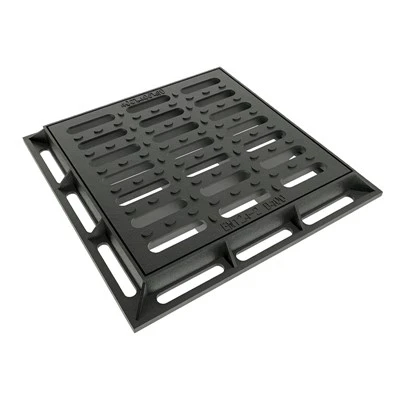
Cable Trench Cover So to circle back to the original question: Are composite manhole covers resistant to UV radiation? The answer is a resounding yes—when they’re made with the right materials, the right additives, and tested to meet industry standards. At our company, we don’t cut corners on UV stabilizers, we test every batch for long-term performance, and we stand behind our products with a warranty that gives our customers peace of mind, even in the sunniest parts of the world. If you’re a city engineer, contractor, or property manager looking for manhole covers that won’t fail from UV exposure, or if you have questions about how our composite covers perform in your specific climate, we’re here to help. We’d be happy to send you a sample, share our test data, or walk through how our products can fit your project’s needs and budget.
References
- American Society for Testing and Materials (ASTM). Standard Test Method for Accelerated Weathering of Nonmetallic Materials. ASTM G154-21, 2021.
- European Committee for Standardization (CEN). Manhole Covers for Surface Areas Subject to Pedestrian and Vehicular Traffic. EN 124:2015, 2015.
- National Association of Corrosion Engineers (NACE). Corrosion Costs and Preventive Strategies in the United States. NACE International, 2016.
- Composite Manhole Cover Industry Technical Report. American Composites Manufacturers Association (ACMA), 2023.
Hangzhou Hongkun Municipal Engineering Co., Ltd.
We are one of the most experienced composite manhole cover manufacturers and suppliers in China, also accept customized orders. We warmly welcome you to wholesale bulk high quality composite manhole cover in stock here from our factory. If you have any enquiry about quotation, please feel free to email us.
Address: No.666, Jiuheng Road, Shangcheng District, Hangzhou City, Zhejiang Province
E-mail: tsxhxw@126.com
WebSite: https://www.hkmuni.com/
