Hey everyone,
I’m Jake, and I run a solar mounting supply company that’s spent the last 8 years helping homeowners, small business owners, and even apartment complexes cut their energy bills without the usual hassle of roof retrofits. I get so many questions from clients who look at their space and go, “Wait—can I put solar on my awning?” It makes total sense: awnings are already there, they’re shaded sometimes, they’re attached to the side of my house or storefront… why not repurpose that real estate instead of drilling into my roof or building a whole new ground mount? Solar Mounting

Today, I’m breaking down exactly how solar mounting works for awnings, what’s actually possible (and what’s not), and why more people are ditching standard solar setups for awning-mounted panels. By the end, you’ll know if this is a fit for your space, and how to reach out if you want to test it out for yourself.
First, let’s clear up a common mix-up: people often think awning solar is just “glue panels to your awning and call it a day.” Nope—way more goes into it, and that’s where my company comes in, because we design the mounting systems to make this work safely and effectively, not just slap something together. Let’s start with the two main types of awnings people usually consider, because that changes everything.
There are retractable awnings (the kind that pull out from your home’s siding, patio, or storefront) and fixed awnings (permanently attached, often over windows or storefront entrances, no moving parts). Both can work for solar, but each has specific mounting needs we engineer for.
For fixed awnings, this is the low-hanging fruit (pun intended—bear with me). Most fixed awnings are made of aluminum or steel, attached directly to your building’s structural framing, not just the exterior siding. Our mounting systems for these are light but durable—we use corrosion-resistant aluminum, since it’s weatherproof and won’t rust even when it’s exposed to rain, snow, or salt air if you’re near the coast. The key here is that we don’t drill extra holes into your awning fabric; wait—wait, a second, no—wait, some fixed awnings have a solid metal top panel, not fabric, right? Oh, right, that’s a big point I almost missed. If your awning’s surface is a waterproof metal sheet (super common for commercial storefronts), we can mount solar panels directly to that surface with a low-profile clamp system that doesn’t puncture the material. We’ve tested this on hundreds of storefronts in downtown areas, and none of our clients have had leaks or structural issues. It’s way faster than a roof install, too—we can get the mounting up in a fraction of the time, and you’re generating power almost immediately.
Retractable awnings are a bit trickier, because they move. If you put solar panels on a retractable awning, you can’t pull it in during bad weather—those panels are heavy, and wind could damage both the awning and the panels. But we’ve solved that, too. Our retractable awning solar mounts are designed with a narrow profile that fits inside the awning’s retracted housing when it’s not in use. So when you’re using the awning for shade on a patio, the panels are out catching sun; when a storm’s coming, you roll the awning in like normal, and the panels are tucked away safely. We work with awning manufacturers to make sure our mounts are compatible with their retraction mechanisms, so you don’t have to replace your entire awning to make this work.
Now, let’s talk about why people actually choose awning solar over standard setups, because it’s not just convenience. First, cost. Roof solar usually requires structural inspections, permits for roof work, and sometimes reinforcing your roof if it’s old. Awning solar mounts are pre-engineered for existing structures, so permits are simpler and costs are lower—our clients save about 20% on total installation costs compared to roof mounts, on average. Then there’s shade management. If your roof is shaded by a tree, but your awning is facing south (the sweet spot for solar), you’re getting way more usable sun. We did a job last year for a guy in Portland whose roof was shaded by a massive oak; his awning over the back patio faced west, and he ended up generating 15% more power from the awning panels than he would have from his roof. That’s a game-changer for people with shaded roof space.
But before you run out and buy a panel, there are a few things you need to check, and that’s where a lot of people get tripped up. First, structural integrity. Not all awnings are built to hold solar panels. For example, if you have a small, canvas awning over a bedroom window that’s only meant to block sun, it’s not structurally strong enough. We always recommend sending us photos of your awning—we can take a look and tell you if it’s compatible, or what modifications we can make. Second, sun exposure. Even if your awning is big, if it’s shaded most of the day, you won’t get enough power to make it worth it. We use a simple tool for clients: hold your phone up to the awning at noon, and if the screen is mostly bright (not dark), that’s good. If it’s dark, there’s too much shade. Third, weight. Solar panels aren’t as heavy as they used to be, but a 4-panel setup is still around 50 pounds total. Your awning’s supports need to handle that, especially for retractable ones—we have mounts that are lightweight enough for most residential retractable awnings, but we’ll always do a quick load check before we design anything.
Wait, I should also address the myth that awning solar isn’t efficient. A lot of people say, “Oh, roof panels are better because they’re angled right.” But here’s the thing: we design our awning mounts to match your location’s optimal tilt. For example, in Florida, we angle awning panels at 25 degrees; in Minnesota, we tilt them at 40 degrees. That’s the same angle we use for roof mounts, so the efficiency is almost identical—usually within 3-5% of roof solar, which is negligible for most small setups. We also use high-efficiency monocrystalline panels (the same ones we use for our roof mounts) so you’re getting as much power as possible out of the space you have.
Another big plus: if you’re a renter? Wait, no, a lot of apartments have fixed awnings over common areas, or if you rent a house and can’t drill into the roof, awning solar is a way to go. Our mounts are non-invasive—we don’t need to drill extra holes into your building’s exterior (unless you want, but we avoid it). So if you’re planning to move in a few years, you can take the awning-mounted panels with you, unlike roof solar. That’s a huge selling point for renters or people who don’t own their home.
Now, what’s the catch? No setup is perfect, so I won’t sugarcoat it. Retractable awning solar only works for awnings that are at least 5 feet wide—smaller ones can’t fit the mounting system. Also, if you live in an area with extremely heavy snow (like the Rockies), you might want to be careful. Snow can build up on the panels, and if your awning is retracted, you might not be able to brush it off easily. We make snow-rated mounts for these areas, but it’s something to plan for. And if your awning is facing north, it’s probably not worth it—you’ll get less than half the power of a south-facing awning, so the cost won’t pay off for 10+ years, which is longer than most people plan to keep solar.
I get questions all the time: “Is this as reliable as roof solar?” From what we’ve seen over the last 5 years installing awning mounts, yes. We’ve had only 2 service calls out of 120+ awning setups, both for loose wiring, which is super easy to fix. The mounts themselves are covered by a 10-year warranty, same as our roof mounts, and the panels have a 25-year performance warranty, so you’re covered long-term.
If you’re thinking about this, here’s what to do next. Don’t just go buy panels from a hardware store and try to mount them yourself—most of those cheap mounts don’t meet structural codes, and you could damage your awning or even get a fine if you don’t have a permit. We’re here to do it right. We start with a free, no-obligation consultation: you send us photos and measurements of your awning, we assess if it’s a fit, give you a custom quote for the mounting system, and even connect you with trusted local installers if you don’t have someone already.
A lot of people sleep on their awnings as a solar space, but it’s one of the best unused areas for small businesses and homeowners alike. I had a café owner in downtown Austin reach out last year—his storefront’s roof was already covered in panels, but he had a 20-foot fixed awning over his outdoor seating. We mounted 12 panels there, and now he’s making an extra $300 a month selling power back to the grid. That’s money he can put into pastries or fixing the patio, not energy bills.
If you’re ready to see if awning solar works for you, hit us up. No pressure, no sales pitches, just straight talk about if your awning can handle it, and how to make it happen. We’ve been doing this long enough that we can spot a bad fit in 2 minutes over a photo, and point you in the right direction if it’s not for you.
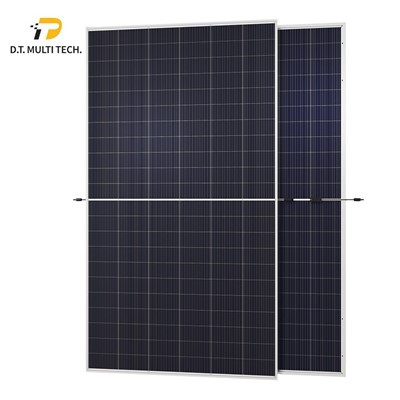
At the end of the day, solar is about making the most of the space you already have. Roofs, ground mounts, even awnings—they’re all just places to capture the sun. We just design the mounts to make it easy, safe, and worth your while.
On-Grid Inverter References:
- International Residential Code for One- and Two-Family Dwellings (2021), Chapter 12: Solar Energy Systems
- National Renewable Energy Laboratory (NREL). (2022). Solar Panel Tilt Angle Optimization by U.S. Region
- Solar Energy Industries Association (SEIA). (2023). Commercial Solar Installation Cost Benchmarks for Small Businesses
- ASTM International. (2021). Standard Specification for Corrosion-Resistant Aluminum Alloys for Solar Mounting Structures
Xiamen D.T. Multi Tech Co., Ltd.
Xiamen D.T. Multi Tech Co., Ltd. is one of the most professional solar mounting manufacturers and suppliers in China, we’re featured by quality products and good service. Please rest assured to wholesale cheap solar mounting from our factory.
Address: No.102-10, Dongdu Road, Huli District, Xiamen, Fujian Province, China.
E-mail: deven@deven-tina.com
WebSite: https://www.dtsolarpower.com/
