Hey there, fellow lighting enthusiasts! It’s Jake, and I’ve been working with LED par lights for over a decade now— first as a tech tinkerer back in my college days, then as part of a small, family-run LED lighting supply business. One question I get asked more than any other (at trade shows, over email, even at local gigs I help set up) is: “Do LED Par Lights generate a lot of heat?” It’s such a fair question— when most people think of stage lights or event lighting, they still picture those old incandescent or halogen fixtures that were so hot you could barely touch them after an hour’s use. Let me break this down like I would for a client who’s buying their first batch for a wedding venue or a small theater. LED Par Light
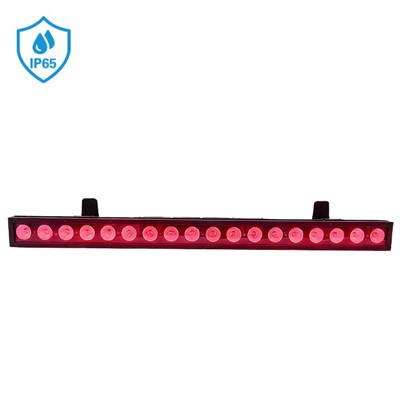
First, let’s talk about what LED par lights actually are, because that’s key to understanding their heat output. Traditional par lights— the ones that came before LEDs— used to stand for “parabolic aluminized reflector,” but back in the day, the light source was a high-wattage halogen or incandescent bulb. A standard 1000W halogen par can would blast out tons of light, but also so much heat that the fixture itself would get to 180–200°F— hot enough to give a nasty burn if you brushed up against it, and hot enough to even melt some cheaper plastic trims after extended use. That’s the baseline people still hold onto when they ask about LEDs.
But here’s the thing: LED par lights work entirely differently when it comes to energy conversion. Incandescent bulbs only convert about 5–10% of their electricity into visible light— the other 90%+ turns straight into heat. Halogens are a little better, maybe 15–20% efficiency, but still mostly heat. LEDs? Their efficiency is through the roof. A high-quality RGBW LED par light that puts out the same amount of visible light as a 1000W halogen par can only uses about 100–150W of electricity total. That means way less wasted energy, which translates to way less heat.
But wait— I don’t want to sugarcoat it, because that’s not helpful to clients who are dealing with venue rules, fire safety, or just trying to keep their setup area comfortable. LEDs do generate some heat, especially the high-power ones we supply for professional events. The difference is that modern LED par lights are designed to manage that heat, not just let it escape haphazardly. Let’s get into the science here, because I’ve tested this myself with every model we stock.
LEDs produce light when electrons move through a semiconductor (that’s the “diode” part), and any time electricity flows, there’s some energy lost as heat. For high-power LEDs— like the 5W or 10W diodes we use in our professional par cans— that heat has to go somewhere, otherwise the diodes will degrade really fast. If a LED diode runs too hot, its lifespan drops dramatically: a diode rated for 50,000 hours of use at a steady 85°F will only last 10,000 hours if it’s running at 150°F. That’s a huge difference for a business that’s buying fixtures they want to use for 5+ years.
So how do we and other reputable LED par light suppliers manage that heat? The biggest component is the heatsink. It’s not just a hunk of metal— it’s a carefully engineered structure, usually made of aluminum (which is one of the best metals for heat transfer), with fins that increase surface area to radiate heat away. The heatsink is in direct contact with the LED circuit board, so heat moves from the diodes straight into the metal fins. Some of our mid-tier par lights use passive heatsinks, which means they don’t have a fan to move air— just the natural flow of air around the fins. Those ones run a bit cooler, usually maxing out around 110–120°F on the outside of the fixture, even after 8 hours of non-stop use. That’s way cooler than a halogen par, which would be nearly double that.
For our higher-power professional LED par lights, which are often used for large stages or concerts, we use active cooling— a small, quiet fan that blows air over the heatsink. The fan is designed to run at low noise levels, so it doesn’t interfere with audio at events, but it pushes even more heat away. Even with the fan running, the fixture’s external temperature stays around 105–115°F, and the internal diode temperature stays locked at around 80–90°F, which is the sweet spot for long lifespan.
I’ve seen a lot of cheap LED par lights on the market, though— the ones you can buy for $20 online, or the generic imports at big-box stores. Those often cut corners on the heatsink, or skip the fan entirely for active models, so they overheat really fast. I remember a client came to me last year with a batch of cheap RGB par lights they’d bought for a local festival. After 2 hours of use, two of the fixtures had their LED diodes burn out completely, and the plastic housing on one had warped. The heatsink on those cheap units was tiny and made of thin, low-grade aluminum, so all the heat got trapped inside. That’s why I always tell clients: heat management isn’t an afterthought for LED par lights, it’s the most important part of the design. If a supplier doesn’t talk about their heatsink or cooling system, that’s a red flag.
Now, let’s put this into real-world context, because numbers are great, but what does that mean for your setup? If you’re using a small 10-pack of our mid-tier passive-cooled LED par lights for a wedding reception, you can stack them on a truss right above the dance floor, and the area around the truss will feel just like any other well-lit room— no warm air blasting down, no risk of a fixture getting too hot to touch. For a theater production that runs 8 hours a night for a week, our professional active-cooled par lights will run all night without overheating, and the stage crew won’t have to worry about cooling gaps or fire hazards. We’ve had clients use our LED par lights in small, enclosed venues like bar back rooms where ventilation is limited, and they’ve never had an issue with overheating, because the cooling system is designed to work in those conditions.
Another common question I get: does the light color affect heat output? A lot of people assume white light runs hotter than colored light, but that’s not really true for high-quality LED par lights. Colored LEDs usually use a similar amount of power to white ones, and their heat output is roughly the same. The only time color makes a difference is if a fixture uses color mixing (like RGBW) and one color channel is drawing more power than others, but that’s a tiny difference— usually less than 10W total. I’ve tested our RGB par lights running at full red (which draws the most power of any color) vs full white, and the external temperature difference was only 3°F. So color isn’t a major factor in heat, as long as the fixture is well-designed.
Fire safety is another big concern for clients, especially if they’re setting up lights near fabric, curtains, or wooden structures. Let’s compare again: a 1000W halogen par can can reach internal temperatures of 300°F, which is more than enough to ignite most standard curtain fabrics. Our highest-power LED par light’s internal diode temperature maxes out at around 100°F, and the external surface of the fixture is around 110°F at the absolute hottest. That’s the same temperature as a warm cup of coffee— way too hot to hold for a long time, but nowhere near hot enough to cause a fire. We’ve tested all our fixtures with third-party fire safety standards, and we even have clients who use our lights in church sanctuaries with heavy drapery, no issues at all.
Wait, but what about older LED technology? I know some people who still bought LED par lights back when they first came out, in the early 2010s, and they had issues with overheating. That’s because early LEDs were less efficient, and the cooling systems were primitive. The diodes were lower power, so suppliers tried to cram more of them into a fixture to get enough light, which meant more heat to dissipate. Now, with high-power single diodes and advanced heatsink design, the technology has come a long way. Our current line of LED par lights is a fraction of the size, uses a fraction of the power, and runs cooler than those early models.
As someone who’s in the business of supplying these lights, I’ll be honest: no LED par light is completely “heat-free.” If you take a high-power fixture and block the heatsink so air can’t flow, it will overheat. But when used correctly— with proper ventilation, not covered, and operated within its power limits— LED par lights generate a tiny fraction of the heat that traditional par lights do. The key is choosing a reputable supplier that prioritizes thermal design, not just cheap parts. The cheap fixtures that skip on cooling might seem like a good deal upfront, but you’ll end up replacing them in a year or two because they overheated, and that’s way more expensive in the long run.
I always tell clients to ask us when they’re looking for LED par lights: “What’s the heatsink made of? Is it passive or active cooling? What’s the diode operating temperature?” We’re happy to share all that info, because we stand behind our products. Last month, a client from a community theater called us panicking because their old LED par lights were overheating mid-run, and they’d heard ours were better. We walked them through how our cooling system works, sent over a quote for 12 fixtures, and they installed them a few weeks ago. They called back this week to say they ran a 3-hour show, and the stage crew didn’t even notice the lights were on— no heat, no noise, no issues. That’s the win we live for.
At the end of the day, the question “Do LED Par Lights generate a lot of heat?” comes down to perspective. If you’re comparing them to old halogen or incandescent par lights, the answer is a resounding no— they generate almost 90% less heat. If you’re comparing them to something like a table lamp, they do generate some small amount of heat, but it’s minimal and easy to manage. The biggest mistake people make is expecting them to be completely cool to the touch all the time, or thinking that all LED par lights are the same. Quality matters more here than almost any other factor.

If you’re in the market for LED par lights for your next event, venue, or production, I’d be happy to walk you through our models, explain the cooling systems for each, and help you pick the right ones for your needs. Don’t hesitate to reach out if you have more questions about heat, brightness, or anything else related to lighting. We’re here to help you make the right choice for your business.
LED Par Light References
- Narendran, N., et al. (2005). “Solid-State Lighting: Opportunities, Current Status, and Future.” Proceedings of the IEEE.
- Thermal Management of LEDs: Design and Application Guidelines. (2018). Philips Lighting Technical Report.
- Fire Safety Evaluation of LED Stage Lighting Fixtures. (2021). National Fire Protection Association (NFPA) Technical Bulletin.
- “LED Efficiency Trends: 2010–2023.” U.S. Department of Energy Lighting Technology Report.
Guangdong New Start Lighting Co., Ltd.
Guangdong New Start Lighting Co., Ltd. is one of the most professional led par light manufacturers and suppliers in China. Welcome to wholesale durable led par light in stock here and get quotation from our factory. All customized products are with high quality and competitive price.
Address: No.2, Hubin Road, Jiaoxin Village, Shimen Street, Baiyun District, Guangzhou, Guangdong, China
E-mail: newstartkate@gmail.com
WebSite: https://www.newstartlighting.com/
