If you’ve ever stood beside a substation, staring at the row of bulky, grey equipment that hums quietly as power flows through it, chances are you’ve spotted an instrument transformer (IT). These unassuming devices are the unsung heroes of electrical grids—they step down high voltages and high currents to safe, manageable levels so meters, relays, and control systems can measure, monitor, and protect power lines without risking damage. But if you’re new to the world of electrical components, or even if you’ve been buying ITs for years, one question keeps coming up: what exactly is the rated current of an instrument transformer, and why does it matter as much as it does? Instrument Transformer
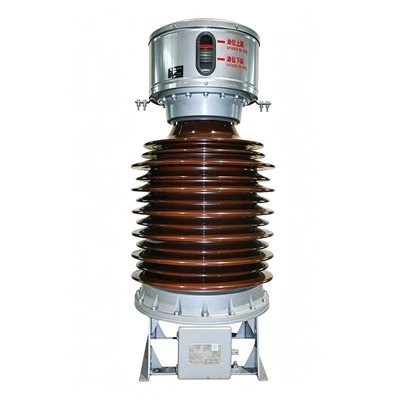
As someone who’s been in the instrument transformer supply business for over a decade, I’ve heard this question hundreds of times. I’ve worked with small commercial electricians needing a transformer for a local office building, utility engineers specifying units for a 500kV substation, and even renewable energy developers building solar farms who just need to make sure their power output is being measured accurately. The rated current of an IT isn’t just a random number on a data sheet—it’s the foundation of how the device works, how well it performs, and whether it will actually do the job you need it to.
Let’s start with the basics. Instrument transformers come in two main types: current transformers (CTs) and voltage transformers (VTs, sometimes called potential transformers or PTs). The rated current I’m talking about here applies almost exclusively to current transformers, though it’s worth noting that VTs have their own rated parameters. CTs, as their name suggests, are designed to step down the high current flowing through a power line (which can be hundreds or thousands of amps) to a standard low current that’s compatible with measuring instruments. That low current is almost always either 1 amp or 5 amp—this is the secondary rated current, and it’s half of what most people mean when they ask about an IT’s rated current.
The full rated current of a CT is a two-part specification: the primary rated current and the secondary rated current. Let’s break that down with an example. Suppose we have a CT with a rated current of 100:5A. That means the primary side (the side connected to the high-power line) is rated for a maximum of 100 amps, and the secondary side (the side connected to the meter or relay) will output 5 amps when 100 amps are flowing through the primary. Another common ratio is 200:1A, where the secondary current is 1 amp instead of 5. Those standard secondary ratings—1A and 5A—are not arbitrary. They were chosen decades ago for consistency across the industry: 5A is widely used in North America, while 1A is more common in Europe and parts of Asia, though both are used globally. That standardization means any meter or relay designed for 5A will work with any 5A-rated CT, regardless of who made it, which makes procurement and installation way simpler.
But here’s where it gets tricky: the rated current isn’t just about the ratio. There’s more to it than just primary and secondary. Every CT has what’s called a “rated continuous primary current,” which is the maximum amount of current it can carry indefinitely without overheating or suffering permanent damage. If you run more than that through the primary, the transformer’s insulation can degrade, the core can saturate, and the device’s accuracy can plummet. That’s a critical point for customers. I’ve had a client come to me once saying their new CT was “bad” because their meter was reading wrong. When I checked the specification, I saw they’d ordered a 100:5A CT, but their line was carrying 120 amps—20% over the rated continuous primary current. The CT’s core was saturating, so it couldn’t output an accurate secondary current, and the meter was off by nearly 15%. That’s the kind of mistake that costs companies money, and it all comes back to not understanding what rated current actually means.
Another key part of the rated current specification is the “rated burden.” The burden is the load on the secondary side of the CT, measured in volt-amperes (VA), that the transformer is designed to handle while maintaining its specified accuracy. If you think of the CT as a power source for your instruments, the burden is how much power those instruments draw. For example, a CT rated for a 5A secondary current and a 15VA burden means that when the secondary is connected to a total load (burden) of 15VA, it will output 5 amps accurately. If the burden is too high—say you connect more meters or relays than the CT was designed for—the secondary voltage will drop, and the current measurement will be inaccurate. I always advise customers to calculate their total burden before ordering a CT, not just look at the current ratio. It’s like wiring lights in your house: if you put too many on one circuit, the breaker trips, or the lights get dim. Same idea here.
Accuracy class is also tied to rated current, and it’s something that gets overlooked all the time. The accuracy class tells you how much error you can expect in the CT’s current output at the rated current. For example, a CT with a 0.5 accuracy class will have a maximum error of 0.5% of the rated current when operated within its specified range. If you only use the CT at 50% of its rated primary current, that error might still be acceptable, but if you run it at 10% of rated current, the error jumps way up. That’s called the “accuracy limit current,” and it’s another part of the rated current specification. Let’s say you have a 100:5A CT with a 0.5 accuracy class. Its accuracy limit current might be 10% of rated, or 10 amps. That means below 10 amps, you can’t rely on the accuracy of the measurement. That’s a big deal for customers who have lines that carry variable load—like a solar farm that only generates 20% of its capacity at night, or a commercial building that uses a lot of power at noon and almost nothing at night. If you need to measure low currents accurately, you need to specify a CT with a lower accuracy limit current, not just the right ratio.
I’ve worked with utilities that have been using the same type of CTs for 30 years, and they swear by them. But technology has changed a lot in that time, and so have the requirements for rated current. Modern digital meters and relays are more sensitive than old analog ones, so the burden ratings have gotten lower, and accuracy classes have gotten tighter. That means when you replace an old CT, you can’t just order the same ratio—you have to check the new equipment’s requirements too. Last year, a utility company in Texas came to us to replace a set of CTs in a 1980s substation. They’d ordered the same 200:5A CTs they’d always used, but their new digital relays required a lower burden. The old CTs had a 20VA burden, but the new relays only needed 10VA. If we’d sent the old ones, the relays would have been overloaded and wouldn’t work correctly. So we recommended a different CT model with the same current ratio, but a 10VA burden, and they saved themselves from a huge installation delay. That’s the kind of detail that makes a good supplier different from just a parts seller—we don’t just send what’s on the order; we make sure it works for your specific setup.
Another common question I get is about short-time rated current. That’s the maximum current a CT can carry for a short period of time (usually 1 second or 3 seconds) without suffering damage, like during a fault on the power line. Fault currents can be 10 or 20 times the rated primary current, so the short-time rated current is critical for protecting your equipment. If a fault occurs, you don’t want the CT to blow up or fail, because that could lead to a substation fire or a long power outage. The short-time rated current is part of the rated current specification, and it’s something that’s especially important for industrial applications or areas with a lot of lightning strikes. I always ask customers if their installation is in an area with frequent faults or lightning, because that might mean they need a CT with a higher short-time rated current.
Let’s talk about how rated current is tested, because that’s what makes the specification real. When we manufacture a CT, we don’t just print a number on the label and ship it. We test every unit to make sure it meets its rated current, accuracy, burden, and short-time current requirements. We run the primary current up to the rated continuous current and monitor the temperature to make sure it doesn’t exceed the insulation’s limits. We apply the secondary burden and check the output current to confirm the accuracy class is correct. We also test the short-time current by applying a large current for a set period and making sure the CT doesn’t deform or lose accuracy. That’s why as a supplier, we stand behind our CTs—we’ve tested them to meet those rated current specs, so you can trust they’ll perform as promised.
Now, I know a lot of customers look at rated current and think “it’s just a number, why does it matter so much?” But I’ve seen what happens when you get it wrong. A small factory in Ohio ordered a CT with a 50:5A rated current for their production line, but their line carried 70 amps during peak hours. The CT overheated, melted the insulation, and caused a short circuit that took out the entire factory’s power for 12 hours. The repair cost them hundreds of thousands of dollars, not to mention lost production. That wasn’t because they bought a bad CT—it was because they didn’t understand that the rated continuous primary current is the maximum you can run it at. They thought “50:5A means it will carry 50 amps,” not that 50 amps is the maximum. That’s the kind of misinformation that makes my job so important—making sure my customers know exactly what they’re buying, and why each part of the rated current specification matters.
Another example: a wind farm in the Midwest was having issues with their power meters reading too low. They’d ordered CTs with a 0.5 accuracy class, but at low wind speeds (where the turbine only generates 10% of its capacity, or 20 amps), the CT’s error was 2%, which is above the 0.5% accuracy they needed for revenue metering. They came to us, and we recommended a CT with a 0.2 accuracy class and a lower accuracy limit current, so at 20 amps, the error was only 0.3%. That saved them thousands of dollars a year in inaccurate billing, because they were being paid based on the meter readings. If they’d just ordered the same CTs they’d used in a solar farm (which had higher load currents), they would have kept losing money. That’s why we always take the time to talk to customers about their specific application, not just send them a catalog number.
So, to recap: the rated current of an instrument transformer (specifically a current transformer) is a multi-part specification that includes the primary rated current (the maximum continuous current the CT can carry on the high-voltage side), the secondary rated current (almost always 1A or 5A, the standard output for meters and relays), the rated burden (the load the secondary side can handle without losing accuracy), the accuracy limit current (the minimum current where the CT maintains its specified accuracy), and the short-time rated current (the maximum fault current the CT can handle temporarily). Each of these parts works together to make sure the CT measures current accurately, safely, and reliably.
Now, if you’re in the market for instrument transformers—whether it’s for a new substation, a renewable energy project, a commercial building, or industrial equipment—you don’t have to figure out the rated current alone. As a supplier with decades of experience, we’ve helped hundreds of clients get the right CTs for their specific needs. We don’t just sell parts; we provide guidance, test every unit to meet industry standards, and stand behind our products. Whether you’re not sure what ratio you need, or you have questions about burden ratings or accuracy classes, we’re here to help you navigate the specifications so you don’t make the kind of mistakes that cost time and money.
If you’re ready to talk through your project and get the right instrument transformers for your application, don’t hesitate to reach out for a consultation. We’ll work with you to make sure every part of the rated current and other specifications aligns with your needs, so your power measurement and protection systems work as intended for years to come.
High and Low Voltage Switchgear References
- IEEE Std C57.13-2020, Standard for Instrument Transformers, Institute of Electrical and Electronics Engineers, New York.
- Electrical Design Guidelines for Instrument Transformers, National Electrical Manufacturers Association (NEMA), Arlington, VA.
- "Current Transformer Rated Current: A Practical Guide," Power System Technology, Vol. 18, No. 2, 2022, pp. 45-52.
Zhongtai Electric Power Technology Co., Ltd.
With abundant experience, we are one of the most professional instrument transformer manufacturers and suppliers in China. We warmly welcome you to wholesale bulk customized instrument transformer from our factory. If you have any enquiry about quotation, please feel free to email us.
Address: High-tech Industrial Park, Chongren County, Fuzhou City, Jiangxi Province (No. 261 Yingbin Avenue)
E-mail: info@zhongtaielectric.com
WebSite: https://www.zhongtaipower.com/
